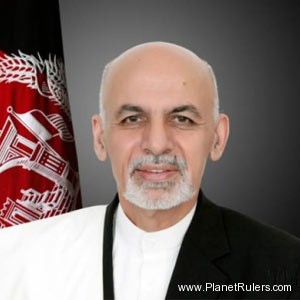
Hibatullah Akhundzada, Supreme Leader of Afghanistan
 Mullah Hibatullah Akhundzada (also transliterated as Haibatullah Akhunzada; born 19 October 1967) is an Afghan Islamic cleric who has served as the Supreme Leader of Afghanistan since the Taliban’s return to power on 15 August 2021. He has led the Taliban movement since May 2016, when he was chosen by the Taliban’s supreme shura after the death of his predecessor Akhtar Mansour in a U.S. drone strike. No country has extended formal diplomatic recognition to the Taliban government as of April 2026, although several (including China, Russia, Iran, Pakistan, the UAE and Qatar) maintain working-level diplomatic contact with Kabul.
A reclusive supreme leader
Akhundzada is one of the most reclusive heads of government in the world. Only two still photographs of him have been publicly released, and his public presence is limited to periodic audio messages read out at Taliban gatherings. He is based in Kandahar rather than Kabul, which functions as the seat of government. He holds no elected office; under the Taliban’s constitutional framework his title is Amir al-Mu’minin (“Commander of the Faithful”), and his edicts (fatwas) have the force of law.
Early life and religious training
Akhundzada was born in the Panjwai district of Kandahar Province into a family of Islamic scholars. He received a traditional religious education in Pashtun madrassas in southern Afghanistan and later in Quetta, Pakistan. During the 1996–2001 Taliban emirate he served as head of the Sharia courts in eastern Afghanistan and later as a senior judge of the Taliban’s supreme court. Unlike many senior Taliban figures, he has no background as a military commander; his authority derives from religious scholarship.
Policy record since 2021
Akhundzada is the author of a sweeping set of decrees that have progressively restricted public life for women and girls in Afghanistan. Secondary education for girls was suspended in March 2022; university education for women was banned in December 2022; women were barred from working for the United Nations in April 2023; and a comprehensive “Promotion of Virtue and Prevention of Vice” law was codified in August 2024, requiring women to cover their faces in public and prohibiting them from speaking loudly in public places. The UN has described the cumulative policy framework as “gender apartheid”.
Humanitarian and economic situation
Afghanistan under Taliban rule has faced one of the world’s worst humanitarian crises. International sanctions, frozen central bank reserves held abroad, and sharp cuts in foreign aid have contributed to economic collapse; the World Bank and UN agencies have estimated that more than half the population requires humanitarian assistance. The country has been hit by a series of earthquakes (notably in Herat in October 2023) and a mass deportation of Afghans from Pakistan and Iran beginning in late 2023.
At a glance
| Full name | Mullah Hibatullah Akhundzada |
|---|---|
| Alt. spelling | Haibatullah Akhunzada |
| Born | 19 October 1967, Kandahar Province |
| Office | Supreme Leader (Amir al-Mu’minin) |
| In power since | 15 August 2021 (Taliban leader since May 2016) |
| Seat | Kandahar (not Kabul) |
| Recognition | No country formally recognises the Taliban government |
| Human rights | UN-designated “gender apartheid”; Freedom House: Not Free |
Frequently asked questions
Click a question to expand the answer.
Who is the leader of Afghanistan in 2026?
Hibatullah Akhundzada has been the Supreme Leader of Afghanistan since the Taliban returned to power on 15 August 2021. He rules from Kandahar as Amir al-Mu’minin. Afghanistan no longer has a president; the constitutional structure inherited from the Islamic Republic was dissolved after the Taliban takeover.
What happened to Ashraf Ghani?
Ashraf Ghani was president of the Islamic Republic of Afghanistan from 2014 until 15 August 2021, when he fled the country as Taliban fighters entered Kabul. He has since lived in exile in the United Arab Emirates and has no role in the current government.
How old is Hibatullah Akhundzada?
He was born on 19 October 1967, which makes him 58 in April 2026.
Is Afghanistan under the Taliban recognised internationally?
No country had extended formal diplomatic recognition to the Taliban government as of April 2026. Several countries, however, maintain working-level diplomatic contact in Kabul, including China, Russia, Iran, Pakistan, the UAE, and Qatar.
What restrictions has Akhundzada imposed on Afghan women?
Since 2021 his decrees have progressively banned girls from secondary school (March 2022), women from universities (December 2022), women from working for NGOs and the UN (late 2022 and April 2023), and required women to cover their faces in public (August 2024 virtue law). UN bodies describe the cumulative regime as “gender apartheid”.
Where does Akhundzada live?
He is based in Kandahar, the Taliban’s spiritual home, rather than in the capital Kabul. Kabul remains the administrative seat of government but major policy decisions are made from Kandahar.
Who runs the day-to-day government in Kabul?
Mohammad Hassan Akhund serves as acting prime minister, and Sirajuddin Haqqani is acting interior minister. All major policy, however, flows from Akhundzada’s office in Kandahar.
Previous Leader: Ashraf Ghani (2014–2021)