
Ismaïl Omar Guelleh, President of Djibouti
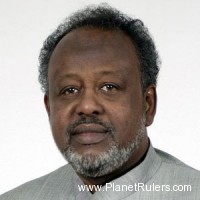
Ismaïl Omar Guelleh — widely known by his initials IOG — is the 2nd President of Djibouti and the world’s most hospitable host of foreign military bases. He has been in office since 8 May 1999 and was re-elected to a sixth five-year term in the 4 April 2026 election. He succeeded his uncle Hassan Gouled Aptidon, who had ruled Djibouti from independence in 1977. Together, Guelleh and his uncle have controlled Djibouti for all but a few months of its 49-year history as an independent state.
Djibouti, a country of roughly 1.1 million people on the Bab-el-Mandeb strait, sits at the most contested choke-point in global shipping. Guelleh has leveraged that geography to host the French base at Monclar (the French Forces in Djibouti / FFDj), the United States at Camp Lemonnier (since 2002 — the U.S. military’s only permanent base in sub-Saharan Africa), Japan’s Self-Defense Force base (since 2011), Italy’s national support base, and — since 2017 — the People’s Liberation Army Navy Support Base at Doraleh, China’s first overseas military installation.
Early life and rise
Guelleh was born on 27 November 1947 in Dire Dawa, in eastern Ethiopia, to an Issa Somali family that had moved across the border for work on the Addis Ababa–Djibouti Railway. He trained in Somalia and France in police and intelligence work and returned to French Somaliland in the 1960s. Following Djibouti’s 1977 independence, his uncle Hassan Gouled Aptidon — Djibouti’s first president — named Guelleh head of the presidential office and the country’s intelligence services. He effectively ran day-to-day government under Gouled from the late 1980s until the aging Gouled stepped down in 1999.
Six elections, opposition boycotts
Guelleh won his first presidential election on 9 April 1999 with 74.4% and was sworn in on 8 May 1999. A 2010 constitutional amendment removed the two-term limit and the 75-year age cap, allowing him to stand in 2011. He has since been re-elected in 2005 (100% in an opposition-boycotted vote), 2011 (80.6%), 2016 (87%), 2021 (98.6%), and 2026. The main opposition — the Union for National Salvation (USN) — has boycotted or been excluded from each of the last three presidential elections, citing voter-list manipulation and the lack of an independent electoral commission.
Economic model: ports, bases, and railways
Djibouti has transformed itself into East Africa’s premier logistics hub. The Doraleh Multipurpose Port and Container Terminal handle ~95% of landlocked Ethiopia’s trade. The Chinese-built 752 km standard-gauge Addis Ababa–Djibouti Railway opened in 2017; the Chinese-constructed Doraleh Port expansion and the AfDB-backed Damerjog Industrial Park have followed. External debt to China is roughly 70% of GDP, among the highest exposures in Africa. In early 2018 Djibouti nationalised the DP World-operated Doraleh container terminal — a move still in international arbitration in London.
Human rights and dissent
Freedom House rates Djibouti “Not Free.” Human Rights Watch has documented the systematic harassment of opposition leaders, suspensions of independent newspapers, and detention of labour activists. The 2011 Djibouti protests — inspired by the Arab Spring — were dispersed with live fire. Prominent opposition leader Abdourahman Boreh has lived in exile in the U.K. since 2009; London courts have repeatedly rejected Djiboutian extradition requests.
Succession speculation
Guelleh, 78, has not publicly named a successor. Speculation focuses on his son-in-law and former Chief of Staff of the Armed Forces, Zakaria Cheikh Ibrahim, and on his son Haïbado Ismaïl Omar Guelleh. The Djiboutian constitution now imposes an age cap of 75 on future candidates, which would formally bar Guelleh from a further term in 2031 — though similar caps have previously been altered mid-stream.
| Full name | Ismaïl Omar Guelleh (“IOG”) |
|---|---|
| Born | 27 November 1947 · Dire Dawa, Ethiopia (age 78) |
| Office | President of Djibouti (2nd) |
| In office since | 8 May 1999 (sixth term from April 2026) |
| Predecessor | Hassan Gouled Aptidon (his uncle) |
| Prime Minister | Abdoulkader Kamil Mohamed (since 2013) |
| Party | People’s Rally for Progress (RPP) / UMP coalition |
| Ethnicity | Issa Somali |
| Spouse | Kadra Mahamoud Haid (First Lady) |
| Children | 5+ (Haïbado, Fatouma-Awo, Nasir, Ismaïl Saalah, Ahmad Shaheer) |
| Foreign military bases hosted | France, USA, Japan, Italy, China, Spain |
| 2026 election | 6th term; opposition largely boycotted |
| Human rights rating | Freedom House: Not Free |
Frequently asked questions
Who is the current President of Djibouti in 2026?
Ismaïl Omar Guelleh has been President of Djibouti since 8 May 1999 and was re-elected to a sixth five-year term in the 4 April 2026 election.
How old is Ismaïl Omar Guelleh?
Guelleh was born on 27 November 1947 in Dire Dawa, Ethiopia, and is 78 years old as of April 2026.
How did Guelleh come to power?
He was the handpicked successor to his uncle Hassan Gouled Aptidon, Djibouti’s first president, who stepped down in 1999 after 22 years. Guelleh had effectively run day-to-day government from the late 1980s.
Why are there so many foreign military bases in Djibouti?
Djibouti sits at the Bab-el-Mandeb strait, controlling access to the Red Sea and Suez Canal. Guelleh has hosted French, U.S. (Camp Lemonnier), Japanese, Italian, and — since 2017 — Chinese military facilities. Foreign-base rents are a major revenue source.
Is Djibouti a democracy?
No. Djibouti holds multi-party elections but Freedom House rates the country “Not Free.” The main opposition has boycotted or been excluded from the last three presidential elections.
What is Djibouti’s relationship with China?
China operates its first overseas military base at Doraleh (since 2017), built the Addis Ababa–Djibouti railway (2017) and multiple ports, and holds roughly 70% of Djibouti’s external debt.
Will Guelleh run again in 2031?
The current constitution imposes a 75-year age cap on presidential candidates, which would formally bar him. However the age cap and term limits have been altered before; succession speculation focuses on his son-in-law Zakaria Cheikh Ibrahim.