
Abdourahamane Tchiani, President of Niger

General Abdourahamane Tchiani is the President of Niger and head of the ruling military junta, the Conseil National pour la Sauvegarde de la Patrie (CNSP — National Council for the Safeguard of the Homeland). Tchiani led the 26 July 2023 coup that overthrew elected President Mohamed Bazoum and has served as de facto head of state ever since. On 26 March 2025 he was formally sworn in as the 11th President of Niger under a five-year transition charter adopted by the junta. He holds the rank of General.
Tchiani’s coup triggered the 2023 Nigerien crisis, a regional confrontation with the Economic Community of West African States (ECOWAS) that nearly led to military intervention. Under his leadership Niger has left ECOWAS, joined the Alliance of Sahel States alongside Mali and Burkina Faso, expelled French and U.S. troops, and moved closer to Russia.
Early life and military career
Tchiani was born in 1961 (some sources give 1960 or 1964) in Toukounous, Filingué Department, in the Tillabéri Region of western Niger. He is ethnically Hausa. He completed secondary school in Niamey in 1984 and the same year joined the Nigerien Armed Forces, training at the National School of Active Officers in Thiès, Senegal. He served in Zinder, Agadez, and Diffa regions, combating drug trafficking and jihadist groups, before being appointed Commander of the Presidential Guard on 8 April 2011 under President Mahamadou Issoufou — a role he held for 12 years under Issoufou and his successor Mohamed Bazoum.
The 26 July 2023 coup
On 26 July 2023, members of the Presidential Guard detained President Mohamed Bazoum and his family inside the presidential palace in Niamey. Tchiani — whom Bazoum had reportedly decided to dismiss two days earlier at a 24 July cabinet meeting — announced the takeover on state television on 28 July, dissolving the constitution and institutions and installing himself as president of the newly created CNSP. Bazoum was held under house arrest and charged with “high treason”; he has not been tried. The African Union, the European Union and ECOWAS condemned the coup and imposed sanctions; ECOWAS authorized a standby force for possible military intervention, but no action was taken.
Rule under the CNSP and 2025 transition charter
The CNSP appointed Ali Lamine Zeine as prime minister in August 2023 and named General Salifou Modi as vice-president. In early 2025 the junta adopted a National Conference transition charter setting a five-year road-map to civilian rule. On 26 March 2025 Tchiani was sworn in as President of the Republic under the charter, elevating General Habibou Assoumane to head the CNSP. Political parties were dissolved and the charter bans junta members from standing in future elections.
Foreign policy: AES, Russia, and ECOWAS exit
On 28 January 2024, Niger, Mali, and Burkina Faso jointly announced their withdrawal from ECOWAS — formalized in January 2025 — and created the Alliance of Sahel States (AES). Tchiani ordered French forces to leave Niger by late 2023 and expelled the U.S. military (including the \$110 million drone base at Agadez) in 2024. Russian Africa Corps (successor to Wagner) personnel and equipment arrived the same year. Niger and its AES neighbours have moved to a common AES passport and a joint 5,000-strong security force, and are negotiating a common currency to replace the CFA franc.
Security situation
Niger remains under sustained jihadist pressure from Islamic State in the Greater Sahara (ISGS) and Jama’at Nusrat al-Islam wal-Muslimin (JNIM), with repeated attacks in Tillabéri and Tahoua. In 2024 and 2025 the UN estimated violent deaths in Niger surpassed 1,500 per year, and more than 300,000 people have been internally displaced. Freedom House classifies Niger as “Not Free” following the suspension of constitutional rule in 2023.
| Full name | Abdourahamane Tchiani (also spelled Tiani) |
|---|---|
| Born | 1961 · Toukounous, Filingué, Niger (age 64–65) |
| Office | President of Niger (11th) |
| In office since | 26 March 2025 (formally); de facto since 28 July 2023 |
| Head of CNSP | 28 July 2023 – 26 March 2025 |
| Predecessor | Mohamed Bazoum (overthrown 26 July 2023) |
| Vice President | General Salifou Modi |
| Prime Minister | Ali Lamine Zeine |
| Military rank | General |
| Prior role | Commander of the Presidential Guard (8 April 2011 – July 2023) |
| Ethnicity | Hausa |
| Alliances | Alliance of Sahel States (AES) with Mali & Burkina Faso |
| Human rights rating | Freedom House: Not Free |
Frequently asked questions
Who is the current President of Niger in 2026?
General Abdourahamane Tchiani is the President of Niger. He led the military coup of 26 July 2023 that ousted elected President Mohamed Bazoum and was formally sworn in as the country’s 11th president on 26 March 2025.
How did Tchiani come to power?
Tchiani, then commander of the Presidential Guard, detained President Bazoum in the presidential palace in Niamey on 26 July 2023 and announced the takeover on state television two days later as head of the CNSP junta.
What happened to President Mohamed Bazoum?
Bazoum and his family were held under house arrest in the presidential residence after the coup. He has been charged with “high treason” by the junta but has not been brought to trial.
Has Niger left ECOWAS?
Yes. Niger, Mali, and Burkina Faso jointly announced withdrawal on 28 January 2024 and formalized their exit in January 2025. The three countries have formed the Alliance of Sahel States (AES).
Are French and American troops still in Niger?
No. French troops withdrew by late 2023 and U.S. forces — including the drone base at Agadez — completed withdrawal in 2024. Niger has since hosted Russian Africa Corps personnel.
When will Niger return to civilian rule?
The CNSP’s transition charter, adopted in early 2025, sets a five-year window from March 2025 to return Niger to civilian rule. The charter bans junta members from standing in future elections.
How old is Tchiani?
Tchiani was born in 1961 (with some sources giving 1960 or 1964) in Toukounous, Niger, making him 64–65 years old as of April 2026.
Mohamed Bazoum, Former President of Niger
Mohamed Bazoum (Arabic: محمد بازوم, romanized: Muḥammad Bāzūm; born 1 January 1960) is a Nigerien politician who served as the 10th president of Niger from 2021 to 2023. He assumed office in April 2021 after winning the 2020–21 presidential election and surviving a coup d’état attempt. He was ousted in the 2023 Nigerien coup d’état by members of the presidential guard and the armed forces led by Abdourahamane Tchiani. Before becoming president, he served as the president of the Nigerien Party for Democracy and Socialism (PNDS-Tarayya).[8] He also served in as a minister of Foreign Affairs from 1995 to 1996 and again from 2011 to 2016. He was minister of State at the Presidency briefly in 2016 and was later appointed minister of State for the Interior between 2016 until his election as president in 2021, when he resigned to focus on running for the 2020–21 presidential election. Bazoum won the second round of the presidential election with 55.67% of the vote against former president Mahamane Ousmane. Bazoum, a member of the Arab minority Ouled Slimane people, is the first Arab president of Niger in the country’s history.
Mahamadou Issoufou, Former President of Niger (re-elected on Mar 20, 2016)
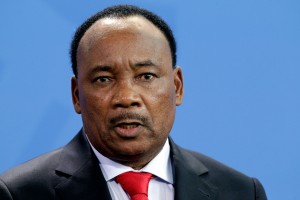 UPDATE: Re-elected on March 20, 2016 with 92.5% of the vote and turnout is 59.8%. Mahamadou Issoufou (born 1952) was elected President of Niger on March 13, 2011 by winning 58% of the vote with 48% turnout. He has been a Nigerien politician, President of the Nigerien Party for Democracy and Socialism (PNDS-Tarayya), a social democratic party. He was Prime Minister of Niger from 1993 to 1994 and President of the National Assembly from 1995 to 1996, and he has stood as a candidate in each presidential election since 1993. During the Presidency of Mamadou Tandja (1999–2010), Issoufou was the main opposition leader. Issoufou, an ethnic Hausa, was born in the town of Dandaji in Tahoua Department. An engineer by trade, he served as National Director of Mines from 1980 to 1985 before becoming Secretary-General of the Mining Company of Niger (SOMAIR). In February 1993, the country’s first multiparty legislative and presidential elections were held. In the parliamentary election, Issoufou’s party, the PNDS, won 13 seats in the National Assembly, and Issoufou himself won a seat as a PNDS candidate in Tahoua constituency. Together with other opposition parties, the PNDS then joined a coalition, the Alliance of the Forces of Change (AFC). This coalition held the majority of the newly elected seats in the National Assembly. Later in February 1993, Issoufou ran as the PNDS candidate in the presidential election. He placed third, winning 15.92% of the vote. The AFC then supported second-place finisher Mahamane Ousmane for president in the second round of the election, held on March 27. Ousmane won the election, defeating Tandja Mamadou, the candidate of the National Movement of the Development Society (MNSD); with the AFC holding a parliamentary majority, Issoufou became Prime Minister on 17 April 1993. In 2009, the PNDS strongly opposed Tandja’s efforts to hold a referendum on the creation of a new constitution that would allow him to run for re-election indefinitely. At an opposition rally in Niamey on 9 May 2009, Issoufou accused Tandja of seeking “a new constitution to stay in power for ever” and the establishment of “a dictatorship and a monarchy”. As leader of the Front for the Defence of Democracy (FDD) opposition coalition, he said on 4 June 2009 that a planned anti-referendum protest would be held on 7 June despite an official ban. As part of the constitutional dispute, Tandja assumed emergency powers on 27 June. Accusing Tandja of undertaking a coup d’état, “violating the constitution and … forfeiting all political and moral legitimacy”, Issoufou called on the armed forces to ignore his orders and urged the international community to intervene. Issoufou was detained at his home by the army’s paramilitary police on 30 June; he was questioned and released after about an hour. A nationwide strike called by the FDD was held on 1 July and was deemed partially successful by the press. The referendum was held on 4 August 2009, despite the opposition’s furious objections and calls for a boycott, and it was successful. Speaking on 8 August, shortly after the announcement of results, Issoufou vowed that the opposition would “resist and fight against this coup d’etat enacted by President Tandja and against his aim of installing a dictatorship in our country”. On 14 September 2009, Issoufou was charged with misappropriation of funds and then released on bail. He said that he was actually charged for political reasons. Subsequently he left the country. On 29 October 2009, international warrants for the arrest of Issoufou and Hama Amadou were issued by the Nigerien government, and Issoufou returned to Niamey from Nigeria late on 30 October in order “to cooperate with the judiciary”. Tandja was ousted in a February 2010 military coup, and a new transitional junta enabled the opposition leaders to return to politics in Niger while preparing for elections in 2011. The PNDS designated Issoufou as the party’s candidate for the January 2011 presidential election at a meeting in early November 2010. Issoufou said on the occasion that “the moment has come, the conditions are right”, and he called on party members to “turn these conditions into votes at the ballot box”. Some observers considered Issoufou to be potentially the strongest candidate in the election. Tandja Mamadou, Former President of Niger
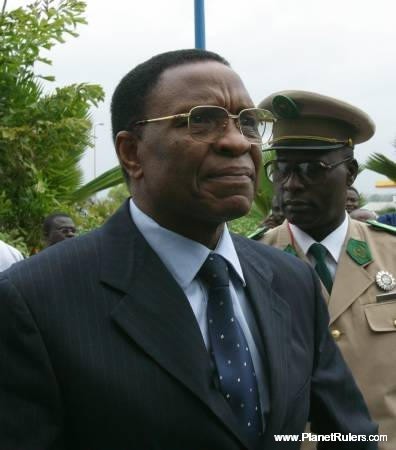
Born Tandja Mamadou in 1938 in Maine-Soroa, near the Lake Chad region of Niger. Education: Completed training at a military school. Career Soldier and politician. Participated in the military junta that ousted President Diori, 1974; Prefect of the Region of Tahoua, 1981-88; Ambassador of Niger, 1988-90; Minister of the Interior, 1990-91; retired from military; made two unsuccessful presidential bids; active in political demonstrations against government and was arrested, 1997; elected to a five-year term as president of Niger, 1999. Life’s Work One of the first “democratically-elected presidents of Niger, Tandja Mamadou, is the hope of the future to many,” said the Camel Express, an English newsletter of the Friends of Niger. Though only history will attest to whether or not Mamadou will fulfill the hope that he has been identified with, he has already dedicated much of his life and energy to the government of Niger, creating a legacy of commitment that many countries, developed and developing, would envy. Like many postcolonial African nations, Niger has known little peace since securing its independence from France in 1960. Ranked as one of the poorest countries on Earth and possessing one of the largest foreign debts, the country has suffered greatly and continues to battle with poverty, a dilapidated infrastructure, ongoing warfare between ethnic groups, and bloody political coups. Mamadou was born in Maine-Soroa, in the Lake Chad region of southeast Niger in 1938. He was educated at a military school and pursued a career in the Nigerien Armed Forces, where he eventually rose to the rank of Colonel. His high rank in the military afforded him close contact with the government and in 1974 Mamadou played a key role in a military coup that ousted then President Hamani Diori. Another military leader, Lieutenant Colonel Seyni Kountché, assumed the presidency and a military government was established that would last the next 15 years. During this time Mamadou held many high-level governmental posts, including that of Prefect of the Region of Tahoua (similar to governor of a state) from 1981 to 1988. Following Kountché’s death in 1987, some sources close to the presidency indicated that Kountché wanted Mamadou to succeed him as president. However, another officer, General Ali Seybou, became the next military president of Niger. Mamadou continued to hold posts in the government under Seybou as well, including the role of Ambassador to Nigeria, one of Niger’s most important neighbors. Niger relies heavily on imports of basic commodities from Nigeria including electricity. Mamadou held this post from 1988 to 1990, at which time he was appointed Minister of the Interior. He remained in this role until 1991 when Seybou dismantled the military government and instituted a civilian democracy. Soon after, Mamadou retired from the military, though not from political life. In 1993 Mamadou ran for president of Niger in the country’s first democratic elections in over two decades. Although Mamadou captured the most votes, these did not translate into a clear majority, and he lost the election in a rerun to his closest opponent, Mahamane Ousmane, amidst rumors that he was not a native born citizen of Niger. Following this loss, Mamadou assumed the leadership of his political party, the National Movement for the Development of Society (MNSD). Ousmane’s presidency was marked with periods of ethnic violence as well as continued economic instability and poverty. In 1996 the country was once again engulfed in a military coup, this time led by Colonel Ibrahim Bare Mainassara, who reestablished military rule. Recognizing, however, that a military leadership would potentially threaten foreign aid, Mainassara decided to legitimize the new government with an election. Mamadou, as well as recently-ousted President Ousmane, ran against Mainassara for the post, but before the election could take place, Mainassara outlawed political rallies, replacing the electoral congress with his own cronies and becoming Niger’s elected president. During Mainassara’s rule, Mamadou and other political leaders, including his former rival, Ousmane, staged a number of boycotts against the government, brazenly acting in defiance of the President. Together they formed the Front for the Restoration and Defense of the Democracy, and in 1997, in an extravagant political move, Mamadou and two other opposition leaders turned themselves into Mainassara’s government to be willingly arrested as political dissidents. Dissatisfaction with Mainassara’s government grew as Niger’s dire economic situation worsened. Poverty continued to rise and many civil servants, including soldiers, were not being paid. Along with the political dissidence fueled by Mamadou and others, the situation ignited and on April 9, 1996, Mainassara’s own presidential guard assassinated him. Once again, a military state was declared and Major Daouda Malam Wanke, of Mainassara’s guard, assumed control. Unlike previous military leaders, however, Wanke claimed not to want the presidency. He vowed instead to oversee the transition of the government to a civilian-led democracy. International watchdogs and human rights groups, aghast at the bloody assassination, were skeptical and foreign aid was suspended. But Wanke worked quickly, turning to Nigeria for assistance in planning the transition to democratic rule. Six months later, Mamadou and six other political leaders were running for office. In November of 1999 Tandja Mamadou was elected president with sixty percent of the vote. International observers agreed that the election was conducted freely and fairly, although it is estimated that only thirty percent of the population voted. In one of his first postelection press conferences, Mamadou stated, as quoted by www.brecorder.com: “My first priority will be political stability and then institutional and social stability.” He continued, “Then I will tackle the reconstruction of the country’s economy and finances around which all of today’s problems revolve.” Mamadou has concentrated on meeting those goals, and according to the Panafrican News Agency website, “For Niger, the year 2000 was essentially a year of concrete moves to enhance political and social stability.” Among Mamadou’s first actions in office was the reestablishment of ties with other African democracies, including Nigeria. Not only would this help preserve the trade ties between the two nations, but Nigeria’s considerable clout could help prevent any future attempts at a military intervention in Niger’s new government. Mamadou has also worked hard to rebuild relations with the international community, and within a month of his assuming office, he traveled to France to meet with government and foreign aid officials. Following his visit French aid was restored to Niger. In September of 2000 the European Union committed to 63 billion francs in development projects in Niger. Then, in December of the same year the International Monetary Fund granted Niger 53 billion francs for structural improvements. In addition to the financial crisis, Mamadou and his cabinet have also worked on the social crises that beset their nation. In September of 2000 the president led a “Flame of Peace” ceremony to celebrate the end of the Tuareg fighting that plagued northern Niger for nearly a decade. In that ceremony over 2500 weapons turned in by rebels were burned. In January of 2001 he began a project that would build a series of mini-dams and water reservoirs. The goal of the project was to build three dams a year in each district of the country. According to a report on the Panafrican News Agency website, “the project [is aimed] at alleviating poverty by improving agricultural production through the construction of water supply facilities, the development of arid lands, and the promotion of the fisheries sector.” The report went on to say that “the initiative is in partial fulfillment of the commitments [Mamadou] made to the people of Niger during his campaign for president to alleviate suffering, hunger, malnutrition, thirst, diseases, and ignorance.” In that vein, Mamadou has also launched a polio immunization program, literacy programs, and subsidies for grain and other commodities. He also instituted a ban on hunting to help protect Niger’s dwindling wildlife population that includes giraffes, lions, and rhinos. Despite his successes, Mamadou’s tenure has not been without controversy and opposition. Just days following his swearing-in ceremony, there was a public outcry when Mamadou, in accordance with the constitution, revealed his assets. They included six villas, three houses, two vehicles, nearly a thousand head of cattle, and numerous high-ticket items such as televisions, refrigerators, and freezers. In a country where more than sixty percent of the population lives in desperate poverty and even water is a luxury, Mamadou’s admission of wealth was not welcome. Shortly afterwards, his government came under fire from human rights groups when it gave amnesty to participants in the 1996 and 1999 military coups. Famine, outbreaks of factional fighting, AIDS, tourist kidnappings, crime, and student unrest continued to plague the country, and opposition leaders regularly spoke against Mamadou, staging walkouts of government sessions, and hosting rallies in protest of the government’s actions. With many challenges ahead of him, Mamadou would have to rely on his political and military experience if he would lead his country into the future.