
Kim Jong Un, Supreme Leader of North Korea
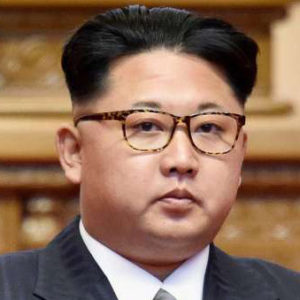 Kim Jong Un (born 8 January, commonly reported as 1984, though official Korean sources have cited 1982) is a North Korean politician who has served as the Supreme Leader of North Korea since December 2011, following the death of his father, Kim Jong Il. He is the third ruler from the Kim dynasty, which has governed the Democratic People’s Republic of Korea since its founding by his grandfather Kim Il Sung in 1948. Although Western media often refers to him informally as “President” of North Korea, his formal titles are General Secretary of the Workers’ Party of Korea and President of the State Affairs Commission, along with supreme commander of the Korean People’s Army. Under North Korea’s constitution, the title of “Eternal President” is held in perpetuity by his late grandfather.
Early life and education
Kim is the second of three children of Kim Jong Il and his third partner, the dancer Ko Yong Hui. He was educated in part at the private International School of Berne in Switzerland under a pseudonym during the late 1990s, before returning to Pyongyang to attend Kim Il Sung Military University from around 2002 to 2007. He was designated his father’s successor in 2009 and made a series of carefully choreographed appearances in state media from 2010 onward.
Rise to power and consolidation
Kim Jong Un assumed leadership on 17 December 2011 and moved quickly to secure his position. Within two years he had removed or executed a number of senior figures associated with his father’s generation, most notably his own uncle Jang Song Thaek, who was executed in December 2013. His half-brother, Kim Jong Nam, was killed with the nerve agent VX at Kuala Lumpur International Airport in February 2017; UN and South Korean investigators attributed the assassination to North Korean operatives.
Nuclear and missile programme
Under Kim, North Korea has conducted four of its six nuclear tests (2013, 2016 twice, and 2017) and has dramatically expanded its ballistic missile arsenal, including intercontinental-range Hwasong-15, Hwasong-17 and Hwasong-18 launches. The programme has attracted successive rounds of UN Security Council sanctions. Independent estimates by the Stockholm International Peace Research Institute and the Federation of American Scientists place North Korea’s nuclear stockpile in the range of 40 to 50 warheads, with enough fissile material for several more.
Diplomacy
Kim held three unprecedented in-person meetings with U.S. President Donald Trump (Singapore, June 2018; Hanoi, February 2019; and at the inter-Korean border in June 2019) but the talks produced no lasting agreement on denuclearisation. He has also met Chinese leader Xi Jinping and held a string of summits with Russian President Vladimir Putin. In June 2024, Putin visited Pyongyang and the two leaders signed a Comprehensive Strategic Partnership treaty including a mutual-defence clause, marking the closest Russia–DPRK alignment since the Cold War.
Human rights record
Human rights conditions in North Korea are among the worst in the world. A 2014 United Nations Commission of Inquiry concluded that the state had committed systematic crimes against humanity including extermination, enslavement, torture, sexual violence, and persecution. The country operates a network of political prison camps (kwanliso) believed to hold 80,000–120,000 people. Freedom House has rated North Korea the least free country in the world for over a decade.
At a glance
| Full name | Kim Jong Un |
|---|---|
| Born | 8 January, c. 1984 (Pyongyang) |
| Office | Supreme Leader; General Secretary, Workers’ Party of Korea |
| In power since | 17 December 2011 |
| Party | Workers’ Party of Korea |
| Predecessor | Kim Jong Il (father) |
| Nuclear tests | 4 conducted under his rule (2013, 2016 ×2, 2017) |
| Estimated warheads | ~40–50 (SIPRI, 2024) |
| Human rights | Freedom House: Not Free (lowest band globally) |
Frequently asked questions
Click a question to expand the answer.
Who is the leader of North Korea in 2026?
Kim Jong Un is the Supreme Leader of North Korea. He has held ultimate authority since December 2011, when he succeeded his father Kim Jong Il. His formal titles are General Secretary of the Workers’ Party of Korea and President of the State Affairs Commission.
How old is Kim Jong Un?
His most commonly cited birth date is 8 January 1984, which would make him 42 in April 2026. Some North Korean sources have given 1982.
Is Kim Jong Un the President of North Korea?
Not in the way the title is used in Western countries. North Korea’s constitution reserves the title of “Eternal President” for his late grandfather Kim Il Sung. Kim Jong Un rules through the party and the State Affairs Commission.
How did Kim Jong Un come to power?
He was formally designated heir in September 2010 and took power on 17 December 2011 upon the death of his father, Kim Jong Il. He is the third member of the Kim dynasty to rule North Korea.
How many nuclear weapons does North Korea have?
Independent estimates place North Korea’s nuclear stockpile at roughly 40 to 50 assembled warheads, with enough fissile material for several dozen more. The country has conducted six nuclear tests, four of them under Kim Jong Un.
Does Kim Jong Un have siblings?
He is one of three children of Kim Jong Il and Ko Yong Hui. His sister Kim Yo Jong is a senior party official. A half-brother, Kim Jong Nam, was assassinated with VX in February 2017.
What is the Russia–North Korea alliance?
In June 2024 Vladimir Putin visited Pyongyang and signed a Comprehensive Strategic Partnership treaty with Kim Jong Un that included a mutual-defence clause. North Korea has since supplied artillery and troops to support Russia’s war in Ukraine.
Kim Jong-il, Former President of North Korea (died on Dec 19, 2011)
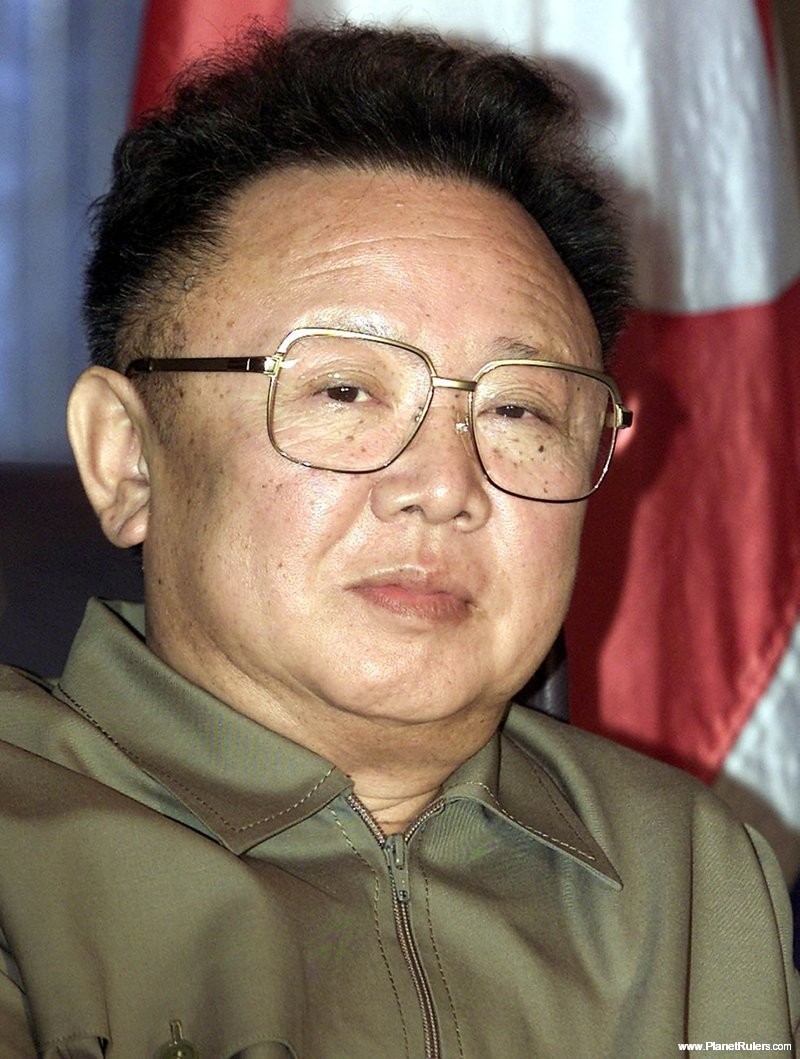 Kim Jong-il, at 64, is the unchallenged leader of North Korea. Since he succeeded his father Kim Il-sung in 1994 the secretive communist state has sunk further into poverty, while its foreign policy has become ever more combative and anti-Western. The birth of Kim Il-sung’s eldest son – now known to his people as “Dear Leader” – is steeped in legend. According to some accounts he was born in February 1942 on Mount Paektu, his birth marked by the appearance of a double rainbow and a bright star in the sky. Others claim he was born February 1941 in Siberia during Kim Il-sung’s period of exile. Kim studied politics at the Kim Il-sung university and graduated in 1964, becoming leader of the Korean Workers’ Party and joining the party politburo. He was later appointed deputy editor of the Propaganda and Agitation department and, in 1973, he became party secretary in charge of Organisation and Propaganda. By 1980 he had become a member of the Central Committee and the designated successor to his father. In 1991 he was appointed Supreme Commander of the armed forces. Little is known about him although there are many stories. He is said to have written six operas within two years and single-handedly designed the Juche tower which signifies the Juche ideology of self reliance blended with Marxism, the Korean idea of communism. It is also rumoured that he has been responsible for kidnapping young women, mainly from Japan, in order to be his companions. Kim Jong-il has been suspected of being involved in the 1983 bomb attack on Rangoon in which several members of the South Korean cabinet were killed and the bombing of a South Korean airliner four years later. Recent reports suggest that the dictator has hired body doubles to carry out boring state visits and reduce the threat from assassins. A liking for exotic foods including roast donkey has contibuted to the dictator’s potbellied physique, although the look is far from typical in his country where many survive on a meagre diet of rice and cabbage.