
Denis Sassou Nguesso, President of the Republic of the Congo
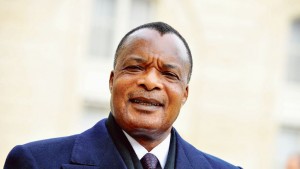
Denis Sassou Nguesso is the President of the Republic of the Congo (Congo-Brazzaville) — one of the longest-serving leaders in the world. He has held the presidency continuously since 25 October 1997, after a 1997 civil war restored him to power, and previously ruled as head of the one-party People’s Republic of the Congo from 8 February 1979 to 31 August 1992 — a combined 42 years at the top of Congolese government. He won his most recent election on 21 March 2021 with an officially reported 88.4%. The next presidential election is scheduled for March 2026.
Sassou leads the Congolese Party of Labour (PCT), the Marxist-Leninist-era ruling party he has headed off and on since 1979. Under his rule Congo-Brazzaville is one of sub-Saharan Africa’s largest oil producers (the fourth-largest in the region by output), an OPEC member, and a highly indebted middle-income country repeatedly restructured by the IMF and China Exim Bank.
Early life and military career
Sassou Nguesso was born on 23 November 1943 in Edou, Cuvette Department, in then-French Equatorial Africa. He is a member of the Mbochi ethnic group. He trained at the École militaire préparatoire générale Leclerc in Brazzaville and at French military academies including Saint-Maixent. He joined the Congolese Army in 1960, rising through the ranks during Congo’s successive military regimes, reaching the rank of General.
First presidency (1979–1992)
After joining the PCT Central Committee in 1970 and serving as Minister of Defence, Sassou Nguesso became President of the People’s Republic of the Congo on 8 February 1979 following the assassination of Marien Ngouabi’s successor. He presided over a Marxist-Leninist one-party state aligned with the Soviet Union and Cuba. Under international and domestic pressure he introduced multi-party politics in 1990 and was stripped of executive powers by the 1991 National Conference, remaining a ceremonial head of state. He placed third in the 1992 presidential election won by Pascal Lissouba and went into opposition.
1997 civil war and return to power
In June 1997, with Lissouba’s term due to end, government forces moved to disarm Sassou’s private Cobra militia. A four-month civil war followed; Sassou’s forces, backed by Angolan troops, captured Brazzaville in October 1997. He was proclaimed president on 25 October 1997 and has governed continuously since. He won elections in 2002 (89%, with the main opposition boycotting), 2009 (78%), and 2016 (60%, after a 2015 referendum removed presidential term and age limits).
2015 constitutional referendum and post-2015 politics
On 25 October 2015 a constitutional referendum — boycotted by the opposition and marred by protests in which at least six people were killed — replaced Congo’s 2002 constitution with one that removed the two-term presidential limit and the 70-year age cap, creating a new 5-year renewable term. Opposition leaders Paulin Makaya and André Okombi Salissa were subsequently imprisoned on charges relating to the protests. Sassou won the March 2016 election with 60.4% — his lowest margin since 1997. The 2021 election, boycotted by several opposition parties, gave him 88.4%.
Economy and corruption allegations
Oil accounts for approximately 80% of exports and 60% of government revenue. Congo-Brazzaville defaulted on Chinese and bilateral debt in 2017; the IMF reached a \$449 million Extended Credit Facility in July 2019 and renewed facilities through 2024. The Sassou family has been the subject of French and U.S. investigations into the “biens mal acquis” (ill-gotten gains) case; his son Denis-Christel Sassou Nguesso, long a parliamentarian and MP for Oyo, was sanctioned by the U.S. Treasury in December 2020 for corruption-related activity. Global Witness and Transparency International have documented extensive overseas property holdings by the president’s family.
Human rights
Freedom House rates the Republic of the Congo “Not Free.” Political opposition is heavily restricted; the 2022 death in detention of former opposition presidential candidate Jean-Marie Michel Mokoko — sentenced to 20 years in 2018 on plotting-against-the-state charges — drew UN condemnation. Independent media are limited; internet shutdowns are imposed around elections.
| Full name | Denis Sassou Nguesso |
|---|---|
| Born | 23 November 1943 · Edou, Cuvette Department (age 82) |
| Office | President of the Republic of the Congo |
| Current term | Since 25 October 1997 (current term from 16 April 2021) |
| Earlier term | 8 February 1979 – 31 August 1992 (People’s Republic of Congo) |
| Total time in power | ~42 years (one of the world’s longest current tenures) |
| Prime Minister | Anatole Collinet Makosso (since May 2021) |
| Party | Congolese Party of Labour (PCT, since 1969) |
| Ethnicity | Mbochi |
| Spouse | Antoinette Sassou Nguesso |
| Children | 8+ (including Denis-Christel and the late Edith Lucie) |
| 2021 result | 88.4% (boycotted by much of the opposition) |
| Human rights rating | Freedom House: Not Free |
Frequently asked questions
Who is the current President of the Republic of the Congo in 2026?
Denis Sassou Nguesso has been President of the Republic of the Congo (Congo-Brazzaville) since 25 October 1997, and previously ruled the country from 1979 to 1992 — a combined total of roughly 42 years.
How old is Sassou Nguesso?
Sassou Nguesso was born on 23 November 1943 and is 82 years old as of April 2026.
How long has Sassou Nguesso been in power?
Continuously since 25 October 1997 (28+ years) plus 1979–1992 (13 years), for a combined ~42 years — one of the longest tenures in world politics.
What was the 2015 constitutional referendum?
On 25 October 2015 a constitutional referendum — boycotted by the opposition — removed the two-term and 70-year age limits, allowing Sassou to contest the 2016 and 2021 elections. Protests before the vote left at least six people dead.
Is Congo-Brazzaville a democracy?
No. Congo-Brazzaville holds multi-party elections but Freedom House rates the country “Not Free.” Opposition leaders face imprisonment, independent media are limited, and internet shutdowns occur around elections.
Why is Congo-Brazzaville important economically?
It is one of sub-Saharan Africa’s largest oil producers and an OPEC member since 2018. Oil accounts for roughly 80% of exports and 60% of government revenue.
When is the next presidential election?
The next presidential election is scheduled for March 2026. Sassou is eligible to run again under the 2015 constitution.