
Shehbaz Sharif, Prime Minister of Pakistan
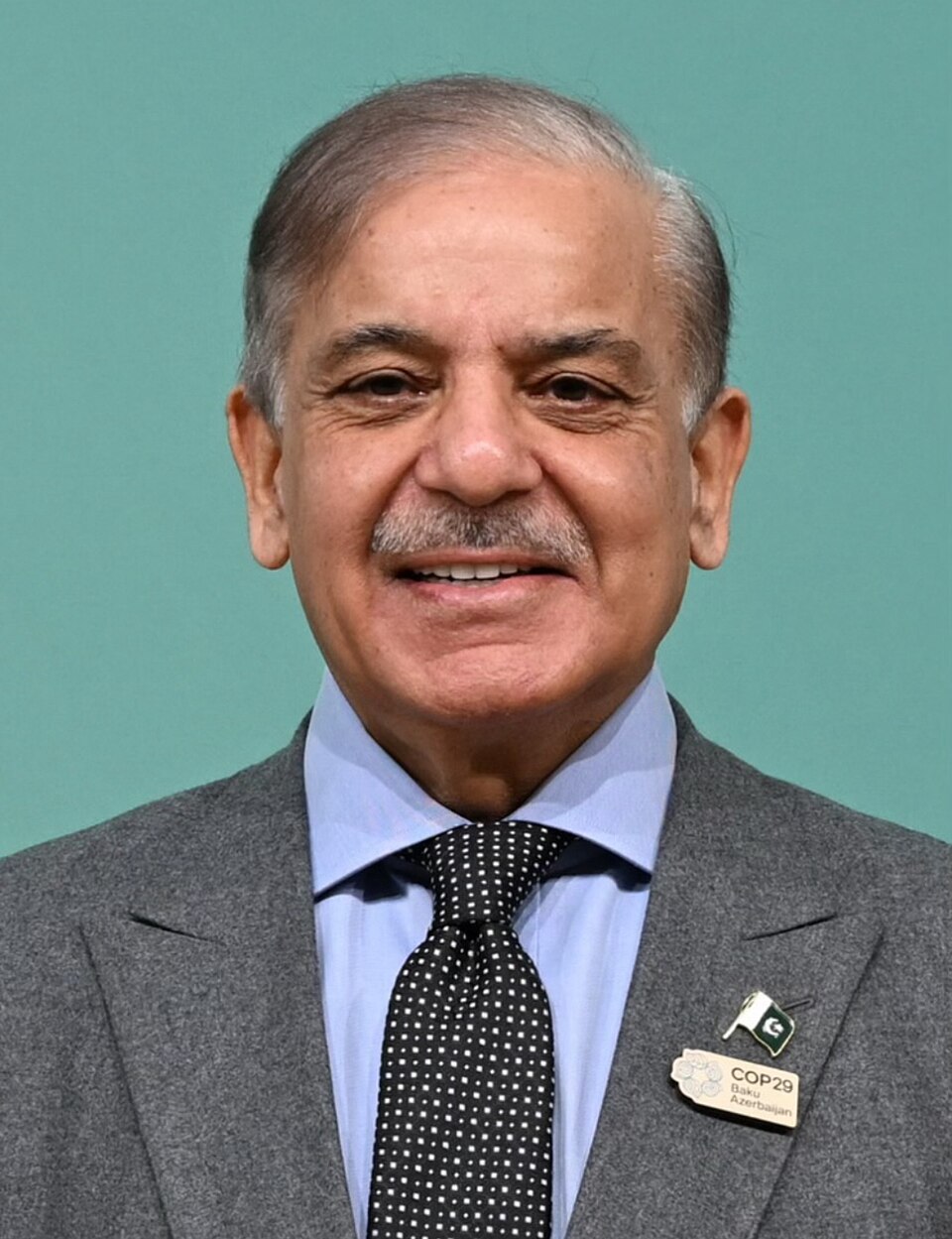
Mian Muhammad Shehbaz Sharif has served as the 24th Prime Minister of Pakistan since 4 March 2024, leading a coalition government formed in the aftermath of the tightly contested 8 February 2024 general election. This is his second term; his first (11 April 2022 – 14 August 2023) was launched by the parliamentary vote of no confidence that removed Imran Khan from office. In the 2024 election the Pakistan Muslim League–Nawaz (PML-N), the political vehicle of the Sharif family, won fewer seats than expected against independents backed by Imran Khan’s outlawed-from-symbol Pakistan Tehreek-e-Insaf (PTI). The PML-N nonetheless assembled a majority through an agreement with the Pakistan Peoples Party (PPP), the MQM-P, and minor parties. Shehbaz received 201 votes on 3 March 2024 to Omar Ayub’s 92 and was sworn in the following day.
Shehbaz was born on 23 September 1951 in Lahore to the Sharif industrialist family from Kashmiri Punjabi stock. He graduated from Government College, Lahore, and Punjab University and entered politics through his elder brother Nawaz, himself a three-time prime minister. Shehbaz served as Chief Minister of Punjab province — Pakistan’s largest — for three terms totalling over a decade (1997–1999, 2008–2013, 2013–2018), earning a reputation for infrastructure delivery (the Orange Line metro, motorways) and for a personal, disciplinarian management style. He was detained by General Musharraf from 1999 to 2000 and by the Imran Khan government on National Accountability Bureau corruption charges from 2018 to 2019, later acquitted.
Politics: The Establishment Question
Shehbaz’s government is widely understood in Pakistan as a civilian face for the security establishment led by Chief of Army Staff General Syed Asim Munir, whose term was extended to five years in October 2024 by a cabinet decision backed by an emergency parliamentary amendment. Imran Khan has been held in Adiala Jail since August 2023 on corruption, state-secrets and toshakhana charges; several of his convictions were subsequently overturned or suspended but he remains detained on others. The PTI has held large protest marches in Islamabad in November 2024 and May 2025, each met with heavy security-force deployments and internet throttling. The May 2025 four-day military clash with India after the April 2025 Pahalgam attack strengthened Munir’s political position and deferred domestic political debate temporarily.
Economy: IMF Stabilisation
Shehbaz took office during Pakistan’s deepest economic crisis in a generation. Inflation peaked at 38% in May 2023; forex reserves fell to less than one month of imports. A US$7 billion IMF Extended Fund Facility signed in September 2024 — the 24th Pakistani IMF programme — has driven a difficult adjustment: the 2024 budget widened the tax net to include agricultural incomes for the first time, raised the GST to 18%, and privatised PIA and KE. Inflation fell to single digits by mid-2025 and the rupee stabilised around 280 per dollar. GDP growth is expected at 3.2% in FY2025–26 per IMF projections. Ongoing risks include flood damage from the 2022 inundations still being rehabilitated, climate vulnerability, Chinese CPEC debt, and political uncertainty ahead of the Senate and by-election cycle.
Foreign Policy
Pakistan remains a close ally of China (Belt and Road CPEC worth US$62 billion since 2015) and a major non-NATO US ally. Under Shehbaz the government has reopened formal dialogue with the Afghan Taliban government in Kabul after repeated Tehrik-i-Taliban Pakistan (TTP) attacks, expelled approximately 800,000 undocumented Afghan refugees since November 2023, and conducted cross-border strikes on TTP targets in Afghanistan in March 2024. Relations with India, frozen since the 2019 Pulwama attack, ruptured further after the April 2025 Pahalgam incident and the May 2025 four-day limited war. Pakistan maintains active ties with Saudi Arabia, the UAE, Qatar and Turkey, and is a full member of the Shanghai Cooperation Organisation.
| Full name | Mian Muhammad Shehbaz Sharif |
|---|---|
| Born | 23 September 1951 · Lahore (age 74) |
| Office | Prime Minister of Pakistan (24th) |
| In office since | 4 March 2024 (previously 11 April 2022 – 14 August 2023) |
| President | Asif Ali Zardari (since 10 March 2024) |
| Army Chief | General Asim Munir (COAS since 29 Nov 2022; term extended to 2027) |
| Party | Pakistan Muslim League–Nawaz (PML-N); coalition with PPP, MQM-P |
| 2024 PM vote | 201 votes to Omar Ayub’s 92 (3 March 2024) |
| Capital | Islamabad |
| Human rights rating | Freedom House: Partly Free (34/100) — downgraded 2024 |
Frequently asked questions
Who is the current prime minister of Pakistan?
Shehbaz Sharif, the 24th Prime Minister, has served since 4 March 2024. This is his second term; his first ran from April 2022 to August 2023. He is the younger brother of three-time former prime minister Nawaz Sharif.
How old is Shehbaz Sharif?
Shehbaz was born on 23 September 1951 in Lahore and is 74 years old as of April 2026.
Who won the February 2024 election?
The election produced no clear majority. Independents backed by the banned Imran Khan’s PTI won the most seats (93) but could not form a government; the PML-N (75 seats) assembled a coalition with the PPP (54 seats) and minor partners and nominated Shehbaz Sharif as prime minister. The result was widely contested.
Is Imran Khan still in prison?
Yes. Former prime minister Imran Khan has been detained in Adiala Jail since August 2023 on a series of corruption, state-secrets and Toshakhana-gift cases. Several convictions have been overturned on appeal, but others stand and he remains in custody pending further proceedings.
What role does the Pakistani army play in politics?
The military establishment, led by Chief of Army Staff General Asim Munir, is widely regarded as Pakistan’s principal centre of power. Munir’s term was extended to five years in late 2024. The May 2025 four-day military clash with India further strengthened his domestic political standing.