
📅 Latest Update — Serbia:
Ana Brnabić became Acting President of Serbia on September 27, 2026. As speaker of the National Assembly, she assumed the presidency on an acting basis after Aleksandar Vučić resigned ahead of early parliamentary elections set for October 25, 2026.
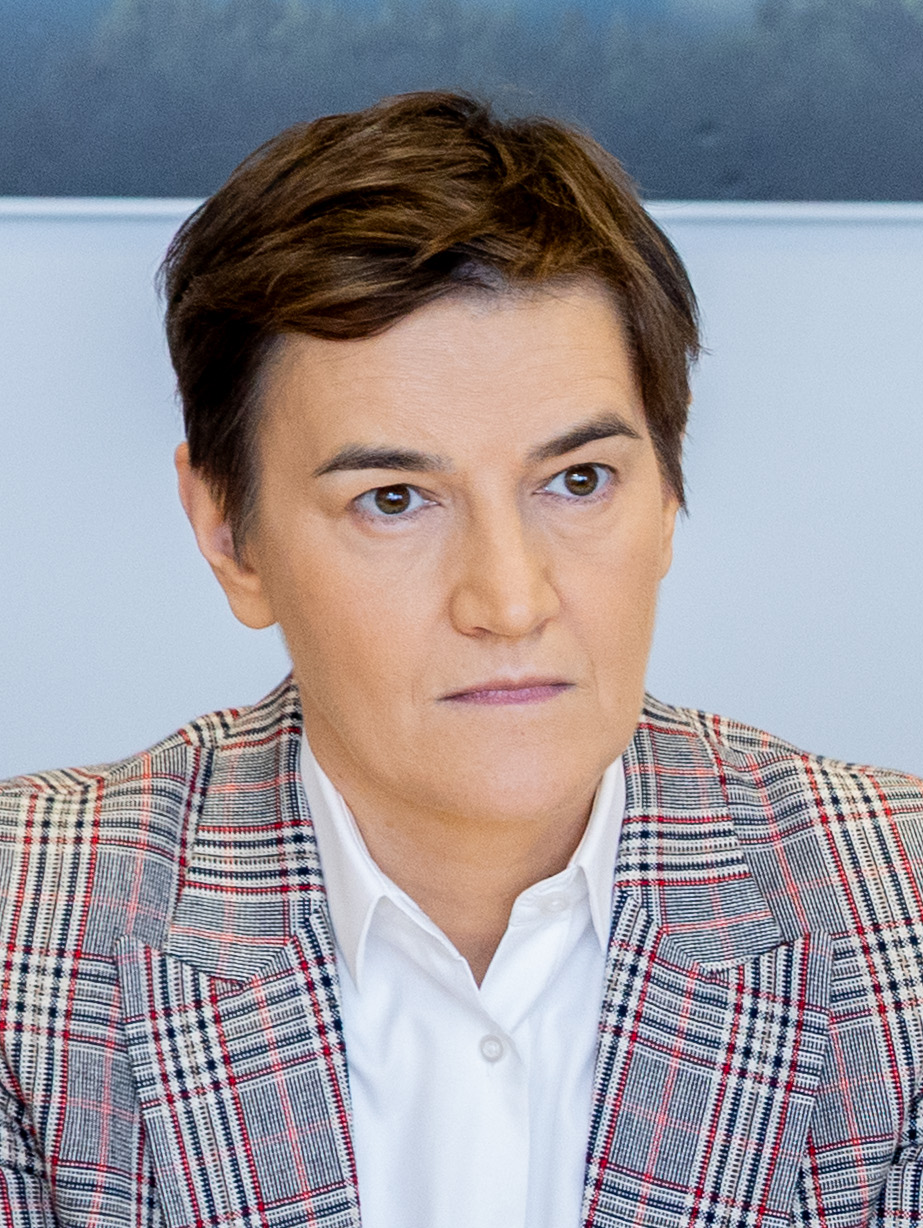
About Ana Brnabić
Ana Brnabić (born 28 September 1975) is a Serbian politician who became acting President of Serbia in September 2026. Before entering politics she worked in the private and non-profit sectors, focusing on economic development and investment projects. She has been president of the National Assembly of Serbia since 2024.
Brnabić entered government in August 2016 as minister of state administration and local self-government under Prime Minister Aleksandar Vučić, where she launched reforms of central government services. When Vučić became President in 2017, he proposed her as his successor, and parliament confirmed her as Prime Minister on 29 June 2017. She was the first woman and the first openly gay person to hold the office, and became Serbia’s longest-serving prime minister, remaining in office until 2024.
Initially elected as a non-partisan, Brnabić joined the ruling Serbian Progressive Party (SNS) in 2019 and was elected one of its vice presidents in 2021. Parliament re-elected her government after the 2020 and 2022 elections. Her premiership emphasised digitalisation of public administration, economic modernisation and EU accession talks, although critics argued that real executive power remained with President Vučić.
After the 2023 parliamentary election she was elected speaker of the National Assembly. In September 2026, after Prime Minister Djuro Macut sought early elections and Vučić dissolved parliament and announced his resignation, Brnabić, as speaker, constitutionally assumed the duties of acting head of state. In 2019 Forbes ranked her among the 100 most powerful women in the world.
📅 Latest Update — Aleksandar Vučić:
Aleksandar Vučić was re-elected President of Serbia on April 3, 2022, with approximately 60% of the vote. His Serbian Progressive Party also won parliamentary elections in December 2023.
Aleksandar Vucic, President of Serbia (Elected on Apr 2, 2017 with 56% of the vote)
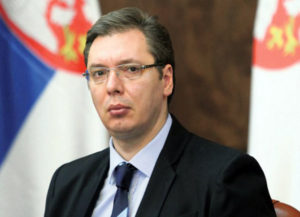 Aleksandar Vučić (born 5 March 1970) is a Serbian politician and jurist who has been the Prime Minister of Serbia since 27 April 2014. He is also the leader and president of the Serbian Progressive Party (SNS). Vučić served as Minister of Information from 1998 to 2000 and later as Minister of Defence from 2012 to 2013, as well as First Deputy Prime Minister from 2012 to 2014.
In April 2017, Vučić was elected President of Serbia with 55%, thus avoiding second round of the vote. He will assume office on 31 May 2017, succeeding Tomislav Nikolić.
Aleksandar Vučić was born in Belgrade, the son of Angelina (née Milovanov) and Anđelko Vučić. His paternal family hails from Čipuljić near Bugojno in central Bosnia, from whence they were expelled by the Croatian fascist Ustaše, settling near Belgrade where his father Anđelko was born. Vučić’s paternal grandfather Anđelko, and tens of other close relatives were killed by the Ustaše. His mother was born in Bečej in Vojvodina. Both of his parents were economics graduates. His father worked as an economist, his mother as a journalist.
Vučić was brought up in New Belgrade, and finished the Branko Radičević elementary school, and later a gymnasium in Zemun. He graduated from the Faculty of Law, University of Belgrade. He learned English in Brighton, England, and worked as a merchant in London for some time. After returning to Yugoslavia, he worked as a journalist in Pale, Bosnia and Herzegovina. There, he interviewed politician Radovan Karadžić and once played chess with general Ratko Mladić. As a youngster, Vučić was a fan of the Red Star football club, often attending Red Star’s matches, including the one played between Dinamo Zagreb and Red Star on 13 May 1990, which turned into a huge riot. The homes of his relatives were destroyed in the Croatian War of Independence.
On 27 July 1997 Vučić married Ksenija Janković, a journalist at Radio Index and Srpska reč. The couple has two children. The marriage ended with divorce in 2011. On 14 December 2013, Vučić married Tamara Đukanović, a diplomat at the Serbian Ministry of Foreign Affairs.
Source: https://en.wikipedia.org/wiki/Aleksandar_Vu%C4%8Di%C4%87
Boris Tadic, Former President of Serbia (Resigned on Apr 5, 2012. The parliament speaker, Slavica Djukic Dejanovic, became Acting President)

Boris Tadic was elected president of Serbia on June 27, 2004. A reformist politician from the Democratic party, Tadic defeated Tomislav Nikolic, a nationalist ally of Slobodan Milosevic, in a presidential run-off that was held after Nikolic fell short of a clear victory in the first round of voting.
A professor of psychology, Tadic entered politics in 1990, when he joined Democratic party. Tadic served as Yugoslavia’s minister of communications and as the defense minister of the union of Serbia and Montenegro. He became the leader of the Democratic party after the assassination of President Zoran Djindjic, the first non-communist prime minister of Serbia since World War II.
Tadic’s pro-Western Democrats led the uprising against Milosevic in 2000, but difficult economic reforms led to a resurgence of nationalism in the years since, and in December of 2003, the Democrats lost their control of parliament and control of the government was handed over to moderate nationalists and conservatives.
Tadic has pledged to revive Serbia’s economy, to move Serbia closer to the European Union and NATO, and to help find a peaceful solution for Kosovo. In his victory speech, he also vowed to ensure that Serbia would “meet its international obligations”, which was understood as a reference to cooperation with the United Nations War Crimes Tribunal at the Hague which is investigating the Balkan wars of the 1990s and is trying Milosevic for crimes that were allegedly committed during his rule. This cooperation is seen as crucial to ensure Western financial support of Serbia.