
William Ruto, President of Kenya
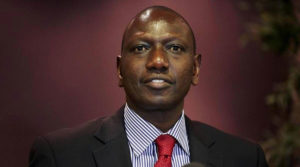
William Kipchirchir Samoei Arap Ruto is the 5th President of Kenya, in office since 13 September 2022. A self-styled “hustler nation” champion and the first Kenyan head of state from the evangelical Protestant tradition, he won the August 2022 election narrowly over long-time rival Raila Odinga by 50.49% to 48.85%. He previously served as Kenya’s first elected Deputy President under Uhuru Kenyatta from 2013 to 2022. Ruto leads the United Democratic Alliance (UDA) and the Kenya Kwanza coalition in government.
His presidency has been dominated by a severe cost-of-living crisis, tax-rise protests that turned into the deadly 2024 Gen-Z demonstrations, the historic impeachment of his first Deputy President Rigathi Gachagua in October 2024, and an aggressive foreign-policy posture — including the March 2024 state visit to Washington (the first by an African president in 16 years) and the Haiti Multinational Security Support mission led by Kenyan police.
Early life and education
Ruto was born on 21 December 1966 in Kamagut, then part of Kenya’s Rift Valley Province, to Daniel Cheruiyot and Sarah Cheruiyot. He is ethnically Kipsigis (Kalenjin). He attended Kamagut Primary School, Wareng Secondary School, and Kapsabet Boys High School, before earning a Bachelor’s, Master’s, and Doctorate in botany from the University of Nairobi (PhD 2018 on plant ecology).
Rise through Kenyan politics
Ruto entered politics through the Youth for KANU 92 group, which mobilised support for President Daniel arap Moi’s 1992 re-election. He was elected MP for Eldoret North in 1997 and served until 2013 (from 2007 under the ODM party). He held cabinet posts as Minister for Home Affairs (2002), Agriculture (2008–2010) and Higher Education (2010–2012). Ruto was indicted by the International Criminal Court in 2011 for crimes against humanity linked to the 2007–2008 post-election violence; the case was terminated without a verdict in April 2016 due to witness tampering and interference. He served as Kenya’s first elected Deputy President alongside Uhuru Kenyatta from 9 April 2013, winning both the 2013 and 2017 general elections on the Jubilee ticket.
2022 election and Kenya Kwanza
Ruto broke publicly with President Kenyatta, who backed Odinga, in 2021. Running on his “hustler nation” economic populism — championing the “bottom-up” Kenyans excluded from elite deals — Ruto won the 9 August 2022 election with 50.49% on a turnout of 64.77%. The Supreme Court unanimously dismissed Odinga’s petition on 5 September. Ruto was sworn in as 5th President on 13 September 2022 with Rigathi Gachagua as Deputy President.
2024 finance bill, Gen-Z protests, and Gachagua impeachment
The June 2024 Finance Bill, which proposed new taxes on bread, vehicles, and mobile money transfers to narrow a fiscal deficit squeezed by debt service of roughly 60% of revenue, triggered the largest anti-government protests in Kenyan history. Protesters — organised online under the “Gen-Z” banner and explicitly rejecting traditional political leadership — breached parliament on 25 June 2024. At least 40 people were killed, largely by police. Ruto withdrew the bill on 26 June, dismissed his entire cabinet on 11 July, and brought opposition figures including former Odinga allies into a “broad-based” government.
On 8 October 2024 the National Assembly impeached Deputy President Rigathi Gachagua on 11 charges, including gross violation of the constitution, money laundering, and undermining the presidency — the first successful impeachment in Kenyan history. The Senate confirmed the impeachment on 17 October. Interior CS Kithure Kindiki was sworn in as the 13th Deputy President on 1 November 2024.
Foreign policy and the Haiti mission
Ruto has pursued a high-profile foreign-policy docket: chairing the African Union Climate Summit in Nairobi (September 2023), state visits to Washington (May 2024 — the first African state visit to the U.S. in 16 years) and Beijing (April 2025), and, most controversially, leading the UN-authorised Multinational Security Support (MSS) mission to Haiti. Kenyan police began deploying to Port-au-Prince in June 2024 at the head of a force drawn also from Belize, Jamaica, the Bahamas, Guyana, and Benin. By October 2025 the MSS had been folded into a Gang Suppression Force under a new UN mandate.
Human rights and economy
Freedom House rates Kenya “Partly Free.” Police violence and enforced disappearances during the 2024 and 2025 protests have been widely documented by Kenya’s independent Human Rights Commission and UN OHCHR. The economy grew roughly 5.2% in 2024 and 2025; the shilling has stabilised after a 2023 slump, though debt-service costs remain the central fiscal constraint.
| Full name | William Kipchirchir Samoei Arap Ruto |
|---|---|
| Born | 21 December 1966 · Kamagut, Kenya (age 59) |
| Office | President of Kenya (5th) |
| In office since | 13 September 2022 |
| Predecessor | Uhuru Kenyatta |
| Deputy President | Kithure Kindiki (since 1 November 2024); Gachagua 2022–24 (impeached) |
| Party | United Democratic Alliance (UDA) |
| Coalition | Kenya Kwanza |
| Spouse | Rachel Ruto |
| Children | 7 (including Charlene Ruto) |
| Education | University of Nairobi (BSc, MSc, PhD botany 2018) |
| 2022 result | 50.49% vs Raila Odinga 48.85% |
| Human rights rating | Freedom House: Partly Free |
Frequently asked questions
Who is the current President of Kenya in 2026?
William Ruto has been President of Kenya since 13 September 2022. His first five-year term runs until 2027.
How old is William Ruto?
Ruto was born on 21 December 1966 in Kamagut and is 59 years old as of April 2026.
What were the 2024 Kenya protests?
Protests in June and July 2024 against the Finance Bill’s new taxes — organised online under the “Gen-Z” banner — escalated into the largest anti-government demonstrations in Kenyan history. At least 40 people were killed, parliament was breached on 25 June, and Ruto ultimately withdrew the bill and dissolved his cabinet.
Who is Kenya’s Deputy President?
Kithure Kindiki, the former Interior Cabinet Secretary, has been Deputy President since 1 November 2024. He replaced Rigathi Gachagua, who was impeached by parliament in October 2024 — the first successful impeachment in Kenyan history.
What is Ruto’s role in Haiti?
Kenya leads the UN-authorised Multinational Security Support (MSS) mission against gangs in Haiti. Kenyan police began deploying to Port-au-Prince in June 2024, joined by forces from Belize, Jamaica, the Bahamas, Guyana, and Benin. The mission was transitioned into a UN Gang Suppression Force in late 2025.
Was Ruto prosecuted at the ICC?
Yes. He was indicted in 2011 for crimes against humanity linked to Kenya’s 2007–2008 post-election violence. The case was terminated without a verdict in April 2016 due to witness tampering and interference.
When is Kenya’s next presidential election?
Kenya’s next presidential election is scheduled for August 2027, at the end of Ruto’s first term. Under the 2010 constitution he may serve one more five-year term.
Mwai Kibaki, Former President of Kenya
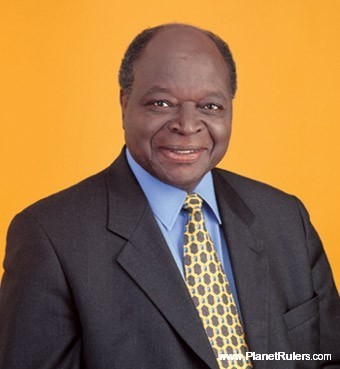
President Mwai Kibaki was born on November 15th, 1931 in Gatuyaini Village, Othaya division, Nyeri, in the Central Province. He is the last-born son of the late Kibaki Githinji and the late Teresia Wanjiku. His siblings include Philip Githinji, Kinyua Kibaki, Anastasia wangui, Waruguru Kibaki (who are all deceased now), Ester waitherero, Bernard Nderitu and a half-brother Samuel Githinji. Mwai Kibaki went to Gatuyaini village school where he completed what was then called Sub “A” and sub “B” which is the equivalent of standard one and two. He then joined Karima mission school for the three more classes of primary school. He later moved to Mathari School (now Nyeri High School) between 1944 and 1946 for Standard four to six. Here, he learnt carpentry and masonry because students would repair furniture and provide material for maintaining the school’s buildings. He also grew his own food as all students in the school were expected to do. Kibaki extended the art of self-reliance to his school holidays where he earned extra money by working as a turn boy on buses operated by the defunct Othaya African Bus Union. After Karima Primary and Nyeri Boarding primary schools, he proceeded to Man’gu High School where he studied between 1947 and 1950. He passed with a maximum of six points in his “O” level examination. He was influenced by the veterans of the two World Wars in his village and once considered becoming a soldier in his final year in Man’gu. This did not materialize because of a ruling by the Chief colonial secretary, Walter Coutts, which barred the recruitment of the Kikuyu, Embu and Meru communities into the army. After Man’gu he proceeded to Makerere University to pursue a Bachelor of Arts degree in Economics, History and Political Science. While at the University, Kibaki was the Chairman of the Kenya Students Association and the Vice-Chairman of Makerere Students Guild. He graduated in 1955 with a First Class Honours Degree (BA) in Economics and took up an appointment as Assistant Sales Manager Shell Company of East Africa, Uganda Division. It is during the same year that he earned a scholarship to do postgraduate work in any British University. He enrolled at the prestigious London School of economics for a B.sc in public finance, graduating with a distinction. He went back to Makerere in 1958 where he taught as an Assistant Lecturer in the economics department until 1960. In December 1960, he quit Makerere and returned home to take up a job with Kanu as an Executive Officer. Earlier in March 1960,he had been involved in the founding of the KANU party. In 1962, Kibaki married Lucy Muthoni, the daughter of a Church Minister, and together they have four children: Judy Wanjiku, Jimmy Kibaki, David Kagai, and Tony Githinji. They also have three grandchildren: Joy Jamie Marie: Mwai Junior and Krystina Muthoni. In 1963 he made a debut in elective politics by contesting the Donholm Constituency (now Makadara) in Nairobi Province, which he won on a Kanu ticket. He was made the parliamentary secretary to the Minister of Finance from 1963 to 1965 and in 1965 he was appointed a minister at the Ministry of Commerce and Industry where he served until 1969.In the same year, Mwai Kibaki was re-elected the MP for Donholm Constituency on a Kanu ticket. He was later moved to the strategic ministry of Finance and economic Planning where he served from1970 to 1978. During this period Kibaki, moved his political base from Nairobi to Othaya and was re-elected in 1974 to represent Othaya constituency on a Kanu ticket. He was re-elected MP for the same constituency in the subsequent elections of 1979, 1983 and 1988. Besides being MP, Kibaki was the Othaya Kanu branch chairman from 1974 to 1991 when he resigned from Kanu to found the Democratic Party (DP). Kibaki was appointed Vice-President in 1978 when Daniel Arap Moi took over the reins of power following the death of founding President, Jomo Kenyatta. He continued to serve in the Ministry of Finance and Economic Planning until 1983 when he moved to the Ministry of Home Affairs and National Heritage .He served until 1988 when he was again moved to the Ministry of Health. Kibaki was also the Leader of Government Business and Chairman of the Sessional Committee from 1978 to 1988.He was the Kanu vice-President from 1978 to 1988. Kibaki founded DP on December 25th, 1991 and vied for the Presidency on its ticket in the 1992 elections.He came third after Daniel Moi and Kenneth Matiba. In 1997 he contested for the Presidency again on the same ticket and came second to Kanu’s Daniel Arap Moi.He became Member and Chairman of Public Accounts Committee from 1997 to 2002. In January 1998 DP became the Official Opposition Party hence Kibaki assumed status of the Leader of the Official Opposition Party. He also became a Member of the House Business Committee from 1998 to 2002. Mwai Kibaki was sworn in as President on 30th December 2002 after winning in the preceding General Elections held on 27th December 2002. He is Kenya’s 3rd President.