
João Lourenço, President of Angola
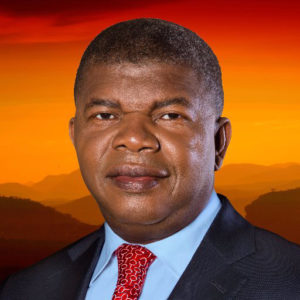
João Manuel Gonçalves Lourenço is the third President of the Republic of Angola, in office since 26 September 2017. A retired army general and long-time MPLA cadre, he succeeded José Eduardo dos Santos, who had ruled Angola for 38 years (1979–2017). Lourenço was re-elected in the August 2022 general election to a second five-year term that ends in 2027. Under Angola’s 2010 constitution the party leader of the winning list automatically becomes president, so the election functioned as a party-list vote rather than a direct presidential poll. He also served as Chairperson of the African Union from 15 February 2025 to 14 February 2026.
Lourenço styled himself “JLo” on the campaign trail in 2017 and promised a sweeping anti-corruption drive. He pursued several high-profile cases against members of the dos Santos family, most notably former billionaire Isabel dos Santos. His second term is defined by Lobito Corridor infrastructure (the US-backed rail and port project linking the DRC copperbelt to Atlantic exports), debt to China, and mediation in eastern DRC.
Early life and military career
Lourenço was born on 5 March 1954 in Lobito, then in Portuguese Angola. He completed his primary and secondary education in Bié Province and Luanda. In August 1974 he joined the People’s Movement for the Liberation of Angola (MPLA) as part of the first group of guerrillas to enter Angolan territory through Miconge. After independence from Portugal in 1975 he served in the FAPLA during the Angolan Civil War against UNITA, studied at the Lenin Military Political Academy in Moscow, and rose to the rank of Army general by the time of his 2017 retirement from active service.
Political rise
Lourenço served as MPLA Secretary-General (1998–2003), Minister of National Defence under dos Santos from April 2014 until his own candidacy in July 2017, and MPLA Vice-President. The ageing dos Santos designated him as MPLA’s top candidate for the 23 August 2017 legislative election; the MPLA won 61% of the vote and Lourenço was sworn in as president on 26 September 2017. In the 24 August 2022 election the MPLA’s margin narrowed sharply — 51% to UNITA’s 44% — the party’s closest result since multiparty politics were introduced in 1992. He began his second term on 15 September 2022 and remains Chairman of the MPLA since September 2018.
Anti-corruption drive and economic reform
Lourenço’s early years saw high-profile prosecutions of dos Santos-era officials and family members, including the freezing of Isabel dos Santos’s assets — she is reported to have been Africa’s wealthiest woman — and the 2021 conviction in absentia of son “Zenú” dos Santos Filho for Luanda Leaks-era fraud. The kwanza was devalued, previously private oil data made public, and a first sovereign credit rating upgrade was achieved. Oil still accounts for roughly 90% of exports, leaving the economy exposed to Brent price cycles; IMF lending and Chinese debt rescheduling have bridged external gaps.
Foreign policy and regional mediation
Under Lourenço, Angola has moved from the Luanda Process mediator in the eastern DRC crisis to a broader role as Washington’s preferred African partner in the region. The United States under Presidents Biden and Trump prioritised the Lobito Atlantic Railway Corridor — a \$4–5 billion rail-and-port refurbishment running from Luanda through the DRC to Zambia — as a counter to China’s Belt and Road in Africa’s critical minerals belt. Lourenço hosted Presidents Biden (December 2024) and Trump (December 2025) in Luanda. As AU Chairperson in 2025 he chaired the AU Summit and pushed for Africa’s 21st seat in the G20.
Human rights
Freedom House rates Angola “Not Free.” Amnesty International and Human Rights Watch have documented restrictions on protest — notably the police shootings of demonstrators in Luanda in November 2020 and at Cafunfo in January 2021 — and the prosecution of opposition activists. Media freedom rankings have declined since 2017. The 2022 election was contested by UNITA, which rejected the National Electoral Commission’s tally and sought (unsuccessfully) a constitutional-court recount.
| Full name | João Manuel Gonçalves Lourenço |
|---|---|
| Born | 5 March 1954 · Lobito, Portuguese Angola (age 72) |
| Office | President of Angola (3rd) & MPLA Chairman |
| In office since | 26 September 2017 (second term from 15 September 2022) |
| Predecessor | José Eduardo dos Santos |
| Vice President | Esperança da Costa |
| Party | People’s Movement for the Liberation of Angola (MPLA) |
| Spouse | Ana Afonso Dias Lourenço (economist, former planning minister) |
| Children | 6 |
| Education | Industrial Institute of Luanda · Lenin Military Political Academy, Moscow |
| Military rank | Army general (retired 2017) |
| 2022 result | MPLA 51% · UNITA 44% (narrowest since 1992) |
| Human rights rating | Freedom House: Not Free |
Frequently asked questions
Who is the current President of Angola in 2026?
João Lourenço has been President of Angola since 26 September 2017 and is serving his second and final five-year term, which ends in 2027.
How old is João Lourenço?
Lourenço was born on 5 March 1954 in Lobito and is 72 years old as of April 2026.
Who did Lourenço succeed?
He succeeded José Eduardo dos Santos, who ruled Angola for 38 years (from 1979 to 2017). Dos Santos died in Barcelona on 8 July 2022.
What is the Lobito Corridor?
The Lobito Atlantic Railway Corridor is a \$4–5 billion U.S.-backed rail-and-port refurbishment connecting Angola’s port of Lobito through the Democratic Republic of the Congo to Zambia, designed to move copper and other critical minerals to Atlantic export routes.
Is Angola a democracy?
Angola holds multi-party elections but Freedom House rates the country “Not Free.” Independent media are restricted and opposition protests have been dispersed by lethal force.
When is Angola’s next election?
Angola’s next general election is scheduled for 2027. Lourenço is constitutionally barred from a third consecutive term.
Was Lourenço the African Union Chairperson?
Yes. Lourenço served as the 23rd Chairperson of the African Union from 15 February 2025 to 14 February 2026, handing over to Burundi’s Évariste Ndayishimiye.
Jose Eduardo dos Santos, Former President of Angola
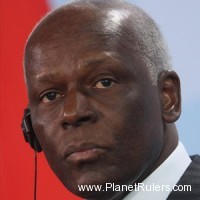 Mr. Jose Eduardo dos Santos was born on August 28, 1942 in Angola’s capital of Luanda. His political career began at an early age when he founded the youth organisation within the MPLA (Popular Movement for the Liberation of Angola) in 1961 to help further Angola’s struggle for independence. He was awarded a scholarship in 1963 to study in the Soviet Union where he received a degree in petroleum engineering. Upon graduation in 1969, he stayed in the Soviet Union to continue his studies in Communications. In 1974, Mr. Jose Eduardo DOS Santos was named Co-ordinator of the Foreign Affairs Department of the MPLA. He subsequently developed diplomatic activities in various African capitals to gain international support for MPLA efforts. Following Angolan independence on November 11, 1975, he was named Minister of Foreign Affairs. He continued to remain active in the MPLA party and contributed to the development of education, culture and reconstruction which led to his appointment as Minister of Planning in 1978. Mr. Jose Eduardo DOS Santos became President of the Popular Republic of Angola after the death of Agostinho Neto in 1979. President DOS Santos actively pursued national and international efforts to bring about peace in Angola. His involvement resulted in the successful withdrawal of South African forces from Angola, the repatriation of Cuban forces and the independence of Namibia. President DOS Santos led Angola in a national transition towards democracy that included both political pluralism and the establishment of a market Economy. President DOS Santos signed the Bicesse Accords in 1991 which allowed for the country’s first democratic elections in 1992. The President and his party won the election and the results were accredited by UN and international observers; however, UNITA contested the election results and the country returned to war.