
Abiy Ahmed, Prime Minister of Ethiopia

Abiy Ahmed Ali is the 4th Prime Minister of the Federal Democratic Republic of Ethiopia, in office since 2 April 2018. He leads the Prosperity Party, which he formed in 2019 by merging three parties of the former ruling EPRDF coalition. Abiy — Ethiopia’s first Oromo prime minister — became a global figure in 2019 when he was awarded the Nobel Peace Prize for ending the 20-year “no war, no peace” stand-off with Eritrea. Within a year his reputation was upended by the two-year Tigray War (November 2020 – November 2022), one of the deadliest conflicts of the 21st century.
His second elected term, confirmed in the June 2021 general election with 410 of 436 House seats for Prosperity Party, expires in 2026. Ethiopia faces continuing conflict in Amhara (Fano militias) and Oromia (Oromo Liberation Army), a debt restructuring under the G20 Common Framework, and a push toward direct Red Sea access — a policy strand that has sharply raised tensions with Eritrea.
Early life and military career
Abiy was born on 15 August 1976 in Beshasha, a village in Ethiopia’s Jimma Zone of Oromia region. His father was Oromo Muslim; his mother Amhara Orthodox Christian. As a teenager he joined the Oromo People’s Democratic Organisation (OPDO) forces fighting the Derg junta. After the fall of Mengistu Haile Mariam in 1991 he joined the Ethiopian National Defence Force, rising to Lieutenant Colonel. He served as a UN peacekeeper in Rwanda (1995) and as a military radio operator during the 1998–2000 Eritrean–Ethiopian war. He later founded the Information Network Security Agency (INSA), Ethiopia’s signals-intelligence service, and holds a PhD in peace and security studies from Addis Ababa University.
Rise to power and early reforms
Elected to parliament in 2010 for Agaro, Abiy rose through the OPDO ranks and was elected its chairman in February 2018 after mass Oromo protests forced Prime Minister Hailemariam Desalegn’s resignation. On 27 March 2018 he was elected EPRDF Chairman; six days later he was sworn in as Prime Minister. His first months in office unleashed a wave of reforms: he released thousands of political prisoners, unbanned opposition parties including the Oromo Liberation Front, lifted a state of emergency, and signed a joint declaration of peace with Eritrean President Isaias Afwerki on 9 July 2018 — earning him the 2019 Nobel Peace Prize.
The Tigray War (2020–2022)
Rising tensions between Abiy’s federal government and the Tigray People’s Liberation Front (TPLF) — the previously dominant force in Ethiopian politics — culminated when the TPLF attacked the ENDF Northern Command on 3 November 2020. A two-year war followed, pitting federal forces (backed by Eritrea and Amhara regional forces) against the TPLF and, for part of the war, the Oromo Liberation Army. Atrocities, ethnic cleansing of Tigrayans in Western Tigray, and a blockade of Tigray caused mass famine. Conservative academic estimates place the war’s total death toll at roughly 600,000, including famine and disease — making it among the deadliest wars of this century. A ceasefire was signed in Pretoria on 2 November 2022 under African Union mediation.
Amhara Fano conflict and Oromia insurgency
Since 2023 Abiy’s government has faced a new war in the Amhara region, where the Fano militias — which had fought alongside federal forces against the TPLF — rose up against plans to dissolve the regional special forces. Oromia has been convulsed since 2018 by Oromo Liberation Army (OLA / OLF-Shene) insurgency in its western and southern zones. Freedom House rates Ethiopia “Not Free.” Human Rights Watch has documented drone strikes on civilians, mass detentions in Amhara, and ongoing ethnic-based violence.
Economic reforms and Red Sea diplomacy
In July 2024 Ethiopia floated the birr, completing a long-delayed IMF programme (\$3.4 billion) and entering G20 Common Framework debt restructuring. Abiy opened parts of the long-protected telecoms, banking, and logistics sectors to foreign investors. His 1 January 2024 memorandum of understanding with Somaliland — granting Ethiopia sea access in exchange for possible recognition of Somaliland — triggered a major diplomatic crisis with Somalia, later partially de-escalated by the December 2024 Ankara Declaration brokered by Turkey. Tensions with Eritrea have continued to build, with public statements from Abiy about Ethiopia’s “existential” need for a sea port.
| Full name | Abiy Ahmed Ali |
|---|---|
| Born | 15 August 1976 · Beshasha, Ethiopia (age 49) |
| Office | Prime Minister of Ethiopia (4th of the FDRE) |
| In office since | 2 April 2018 |
| Predecessor | Hailemariam Desalegn |
| Party | Prosperity Party (since 2019); formerly OPDO / EPRDF |
| President | Taye Atske Selassie (since October 2024) |
| Spouse | Zinash Tayachew |
| Children | 4 |
| Religion | Pentecostal Christian |
| Education | Microlink IT College (BA) · Greenwich (MA) · Leadstar College (MBA) · Addis Ababa University (PhD) |
| Military rank | Lieutenant Colonel (ENDF) |
| Awards | Nobel Peace Prize (2019) |
| Human rights rating | Freedom House: Not Free |
Frequently asked questions
Who is the current Prime Minister of Ethiopia in 2026?
Abiy Ahmed Ali has been Prime Minister of Ethiopia since 2 April 2018 and is serving his second elected five-year term, which expires in 2026. He leads the Prosperity Party.
How old is Abiy Ahmed?
Abiy was born on 15 August 1976 in Beshasha, Oromia, and is 49 years old as of April 2026.
Why did Abiy Ahmed win the Nobel Peace Prize?
Abiy received the 2019 Nobel Peace Prize primarily for ending the 20-year “no war, no peace” stand-off with Eritrea by signing a joint declaration of peace with President Isaias Afwerki on 9 July 2018.
What was the Tigray War?
The Tigray War (3 November 2020 – 2 November 2022) pitted Abiy’s federal government and Eritrea against the Tigray People’s Liberation Front. Conservative academic estimates place the death toll around 600,000, including famine. A ceasefire was signed in Pretoria in November 2022.
Is Ethiopia at war today?
Major combat in Tigray ended in 2022. Active insurgencies continue in the Amhara region (Fano militias since 2023) and parts of Oromia (Oromo Liberation Army). Tensions with Eritrea remain high due to Ethiopian ambitions for sea access.
Is Ethiopia a democracy?
Ethiopia holds multi-party elections but Freedom House rates the country “Not Free.” The June 2021 election — boycotted or not held in several regions — gave Abiy’s Prosperity Party 410 of 436 House seats.
When is Ethiopia’s next election?
National elections are scheduled for 2026, at the end of Abiy’s current term. Whether polling is held in conflict-affected regions of Amhara and Oromia remains an open question.
Hailemariam Desalegn, Former Prime Minister of Ethiopia
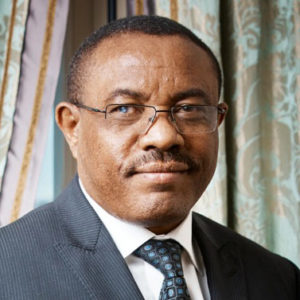 Hailemariam Desalegn Boshe (born 19 July 1965) is an Ethiopian politician who currently serves as Prime Minister of Ethiopia. He previously served as Deputy Prime Minister and Minister of Foreign Affairs under Prime Minister Meles Zenawi from 2010 to 2012. After Meles’ death in August 2012, Hailemariam succeeded him as Prime Minister, initially in an acting capacity. He was then elected as the Chair of the Ethiopian People’s Revolutionary Democratic Front (EPRDF), the ruling party, on 15 September 2012. Hailemariam also served as the Chairperson of the African Union from 2013 to 2014. Hailemariam was born in 1965 in the Boloso Sore District of the Wolayita Zone in southern Ethiopia. Hailemariam is of the Wolayta ethnic group of Ethiopia, the second largest in Southern Nations, Nationalities, and People’s Region (SNNPR). His family belongs to the Apostolic Church of Ethiopia, a Oneness Pentecostal denomination that is not part of the mainstream Ethiopian Protestant Christianity (Pentay), which believes in Trinitarianism. In 1988, Hailemariam received a bachelor’s degree in civil engineering from Addis Ababa University. He subsequently worked as a graduate assistant in the Arba Minch Water Technology Institute (now Arba Minch University). After two years of working in this capacity, he won a scholarship to Tampere University of Technology in Finland, where he earned a master’s degree in sanitation engineering. Upon his return to Ethiopia, he served in different academic and administrative capacities, including the dean of the Water Technology Institute, for 13 years. In between, he also earned an MA in Organizational Leadership at Azusa Pacific University, California, US. Source: https://en.wikipedia.org/wiki/Hailemariam_Desalegn
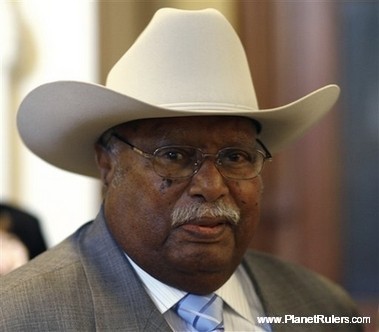
Girme Wolde Giorgis, President of Ethiopia
 Born in 1917* in Addis Ababa, Girme Wolde Giorgis attended the church school and later joined the Teferi Mekonnen School in Addis Ababa in 1926 where he followed his education until the Italian invasion. Between 1930-1933, he studied at an Italian school “The scuola Principe Piemonte” in Addis Ababa. Between 1942 and 1944, he received certificates in Management (in Holland), in Air Traffic Management (in Sweden) and Air Traffic Control (in Canada) under a training programme sponsored by the International Civil Aviation Organization. Government Experience in 1933 he was enlisted at the Ethiopian Military Radio Communication set up by U.K. in 1936 graduated from the Genet Military School as a Sub-Lieutenant joined the Air Force in 1938 and took various Air Management courses became assistant teacher in Air Navigation and Flight Control in 1940 became head of Civil Aviation of the Federal Government of Eritrea in 1947 assumed the post of Director General of the Ethiopian Civil Aviation in 1949 and was Board member of the Ethiopian Airlines during the same period. became Director General of the Ministry of Trade, Industry and Planning at the time of establishment in 1951 became member of parliament in 1953 was elected president of the parliament for three consecutive years. helped win a seat for the Ethiopian Parliament in the International Parliamentary Union and attended conferences of the IPU in Switzerland, Denmark and former Yugoslavia and was elected as Vice President of the 52nd Meeting of the International Parliamentary Union. represented the business community in the Civil consultative Commission set-up by the Dergue until it was dissolved in 1967. served as Manager of the Import and Export Enterprise (IMPEX). served as deputy Commissioner of the Peace Programme drawn up in 1969 by the provisional military government to settle the Eritrean problem peacefully. became member of the Council of Peoples Representatives of FDRE after winning in the Becho Woreda constituency, West Shoa Zone of Oromia State, as a private candidate in the second round elections in 1992. Non-Government Experience 1957 – 1966 Board member of the Ethiopian Chamber of Commerce Representative for Australian Trade Mission in Ethiopia Founder and Director of the Ghibe Agricultural Association Founder and Director of the Keffa and Illubabor Timber Processing Industry While in Eritrea before 1982 President of the Ethiopian Red Cross Society- Eritrea Branch Board President of Cheshire Home Managing Director of Leprosy Control Organization Up on returning to Ethiopia from Eritrea in 1982, he served as Board Member of the Ethiopian Red Cross Society and Head of its International Logistics Department. Launched an environmental protection association called ‘Lem Ethiopia’ in 1983 to date serving as Vice President of the Board of the Association. The President of Ethiopia speaks Oromiffa, Amharic, Tigrigna, Italian, English and French. He is married with five children * All years are in the Ethiopian Calendar.